
Let me tell you about the PetSafe Easy Walk from the angle nobody leads with. I have fitted this harness on eight different dogs over the past two years. I volunteer with a local rescue and do basic leash-manner work with incoming fosters before they go to adoptive homes. The Easy Walk is one of two harnesses we keep in the foster supply bin. But after watching new adopters buy it based on the five-star hype, I want to be clear about what it does well, where it quietly fails, and the important caveats that the listing buries in bullet seven or does not mention at all. The PetSafe Easy Walk No-Pull Dog Harness is a genuinely useful tool. It is also not the universal fix the star rating implies.
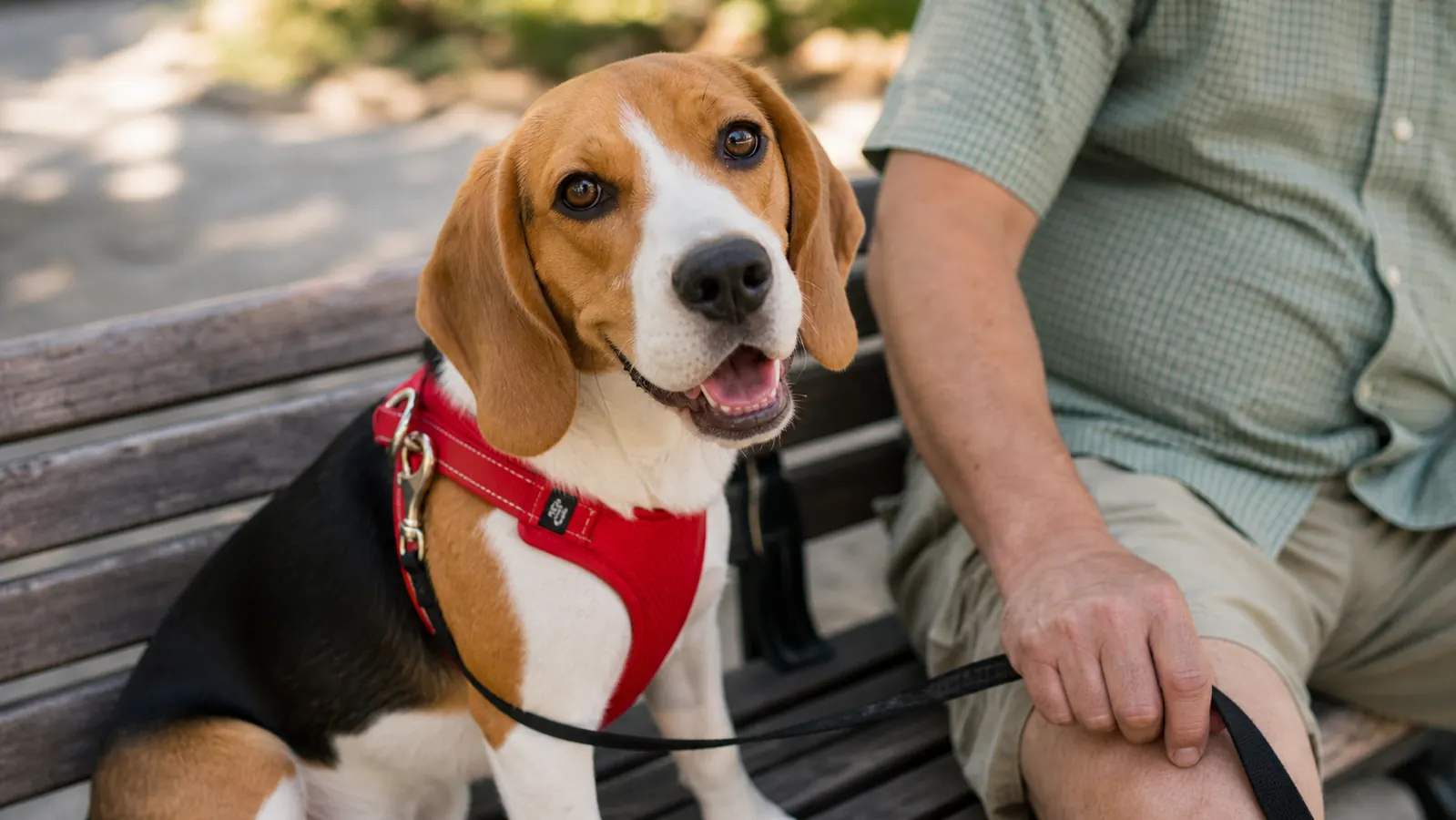
The most recent dog I fitted was Rosie, a 38-pound female Beagle mix, estimated two years old, who came into foster in April 2026. Rosie had never walked on a leash without trying to tow the handler. We put her in a Medium Easy Walk on day two. Here is exactly what happened, and here is what I wish every new buyer knew before ordering.
The Quick Verdict
A well-designed front-clip harness that reliably reduces pulling through physics rather than pain. Buy it with clear expectations: fit takes patience, a few body types fall awkwardly between sizes, and it works best as a training bridge rather than a permanent setup.
Amazon Check Today's Price →Your dog is pulling your shoulder out, and you've already tried the back-clip harness that made it worse. The Easy Walk is the actual next step.
Available in XS through XL, one of the most-reviewed no-pull harnesses on Amazon. Check today's price and size guide before ordering so you land in the right size on the first try.
Amazon Check Today's Price on Amazon →How I've Used and Observed It Across Multiple Dogs
My testing is not one dog over a long stretch. It is eight dogs across a range of sizes, coat lengths, and body shapes, mostly foster dogs coming through our rescue network over the past two years. Breeds represented: Beagle mix, Boxer mix, Boston Terrier, Labrador Retriever, Cattle Dog mix, American Pit Bull Terrier mix, Cocker Spaniel, and a large Shepherd mix. Weights ranged from 22 pounds to 74 pounds. All chronic pullers of varying intensity.
Every dog wore the harness during structured 20-to-30-minute daily walks for a minimum of two weeks. The foster dogs who did not get adopted in that window wore it longer. I also coached three new adopters through the fit process and then followed up a month later to see how things were going. This gives me a useful cross-section of the harness across body types, which is something a single-dog long-term review rarely covers.
Bottom line before I break it down: six of the eight dogs responded well. Two were more complicated, and both cases came down to body geometry rather than a flaw in the design. I will cover all of it.
The Honest Problem Nobody Talks About: The Sizing Gap
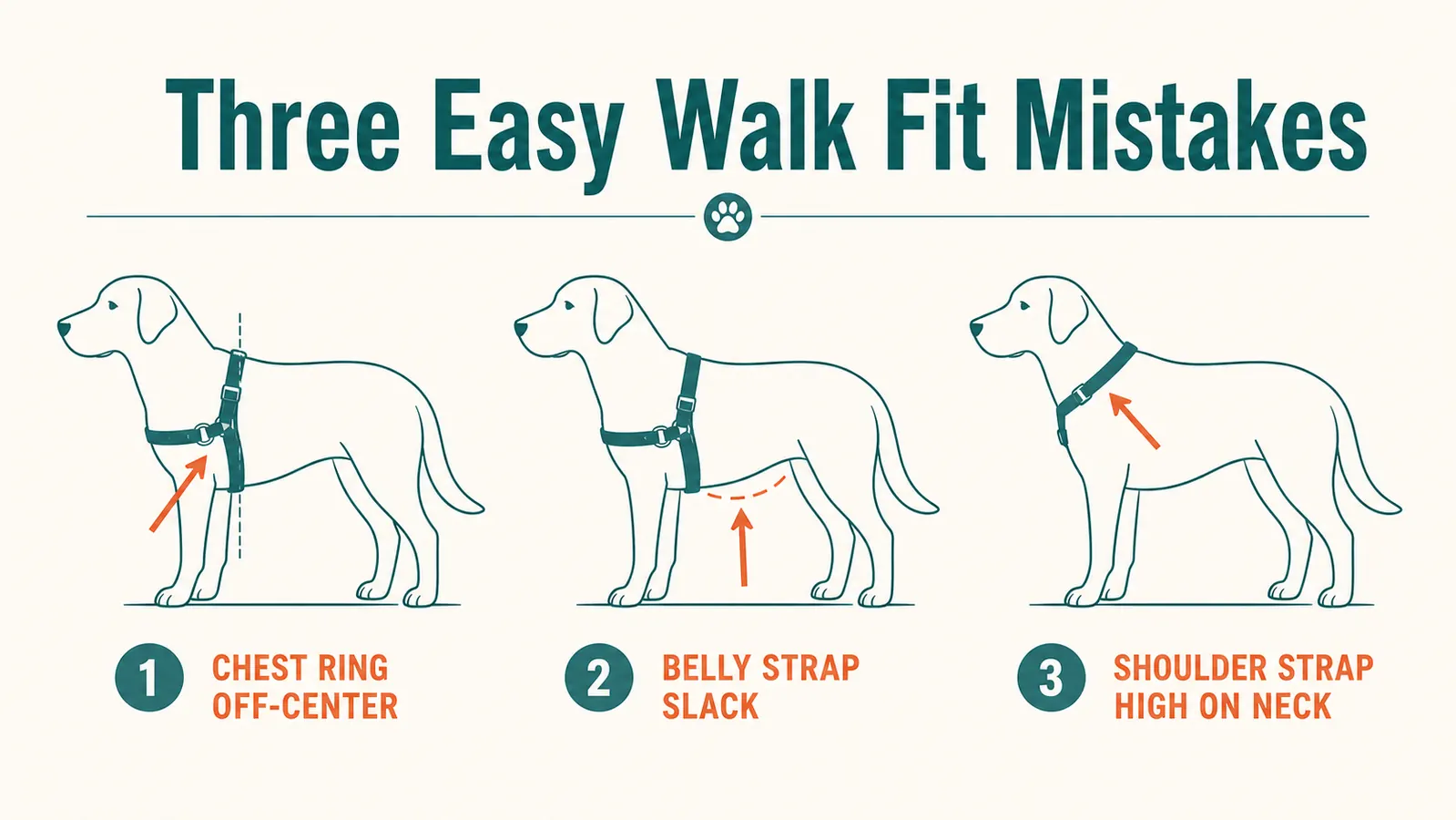
PetSafe sells the Easy Walk in six sizes: XS, S, S/M, M, L, and XL. The sizing chart uses chest girth and weight ranges. On paper this looks complete. In practice, there is a gap between Medium and Large that catches a specific dog profile: stocky, barrel-chested breeds around 40 to 55 pounds. The Boston Terrier in our group weighed 28 pounds and fit the Small cleanly. The Boxer mix weighed 52 pounds and landed in no-man's-land. The Medium was too tight across the sternum. The Large had so much belly strap slack that the chest ring drifted sideways within the first block of every walk.
I went back and looked at Amazon reviews and found this complaint coming up repeatedly under different dog breeds: 'medium was too small but large won't stay centered.' This is not a freak occurrence. It reflects a real gap in the size run for dogs with broad, deep chests relative to their body length. If your dog is a Bulldog, English Bulldog, Boxer, or any breed with an unusually wide chest for its height, size up and plan to use the adjusters heavily, or check out alternative front-clip designs with a wider chest panel.
For dogs with standard or narrow chest profiles, the sizing chart is accurate and the fit comes together without drama. Rosie the Beagle mix, with her narrower hound chest, was a Medium at 38 pounds and fit correctly on the first try. The issue is specific to wide-chested dogs, not universal. But it is real, and the product listing does not call it out.
The Chafing Risk on Short-Coated and Deep-Chested Dogs
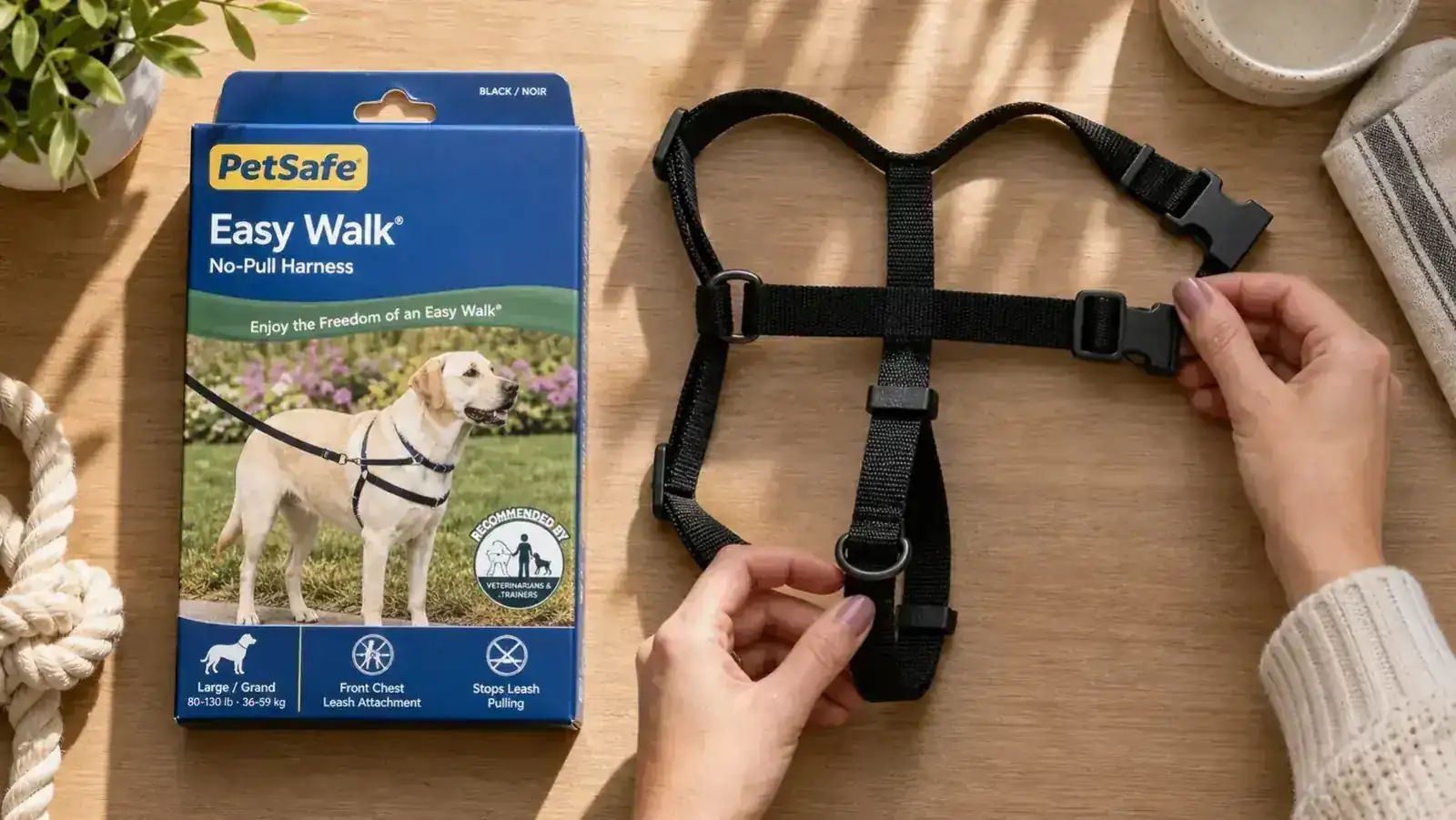
The second honest caveat is chafing. The Easy Walk's belly strap runs horizontally behind the front legs and across the dog's sternum region. On dogs with medium or heavy coats, the coat acts as padding and most owners never see a problem. On short-coated dogs with pronounced axillary folds (the fold of skin in the armpit area), the strap can rub. I noticed this on our Cattle Dog mix and the Pit Bull Terrier mix, both of whom had very short, tight coats and walked hard enough that the harness moved slightly with each stride.
The Pit Bull mix showed a small pink patch behind his right front leg after six days of use. We paused the harness for two days and added neoprene tubing over the belly strap. No further rubbing. The Cattle Dog mix had no issue, probably because her strap was adjusted slightly looser. The risk is real for muscular, short-coated dogs who are also active pullers. Friction increases when the dog is pulling against the harness rather than walking with slack, so the chafing risk drops significantly as the dog's pulling behavior improves. But in that first week or two when the pulling is still heavy, monitor the axillary area closely if your dog fits that profile.
Breeds to watch: American Pit Bull Terriers, American Staffordshire Terriers, Boxers, Vizslas, Dobermans, Weimaraners, and any other short-coated muscular breed. If you spot a hot patch, a thin sleeve of vet wrap or neoprene around the strap solves it immediately and the strap still functions correctly.
The Easy Walk reduces pulling through physics, not pain. That is exactly what makes it effective on most dogs and exactly why it stops working the moment you switch back to a regular harness without having built the underlying leash habit.
What It Actually Does Well: The Mechanism Is Genuinely Smart
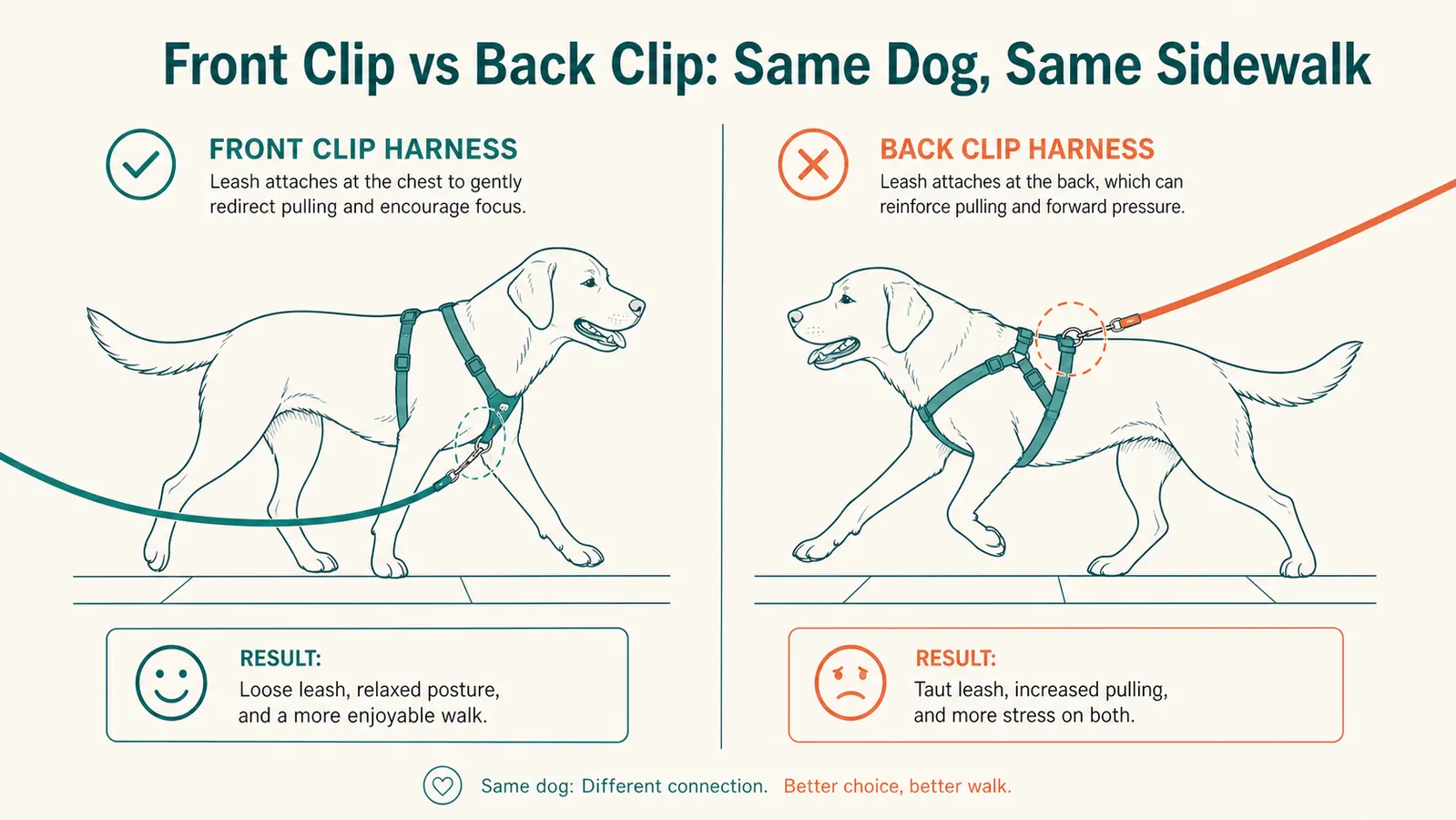
Setting aside the fit caveats, the front-clip design itself is sound. When the dog pulls forward, the leash attachment point is at the center of the chest. The tension redirects the dog's forward momentum sideways toward the handler rather than letting the dog power through a back harness and drag straight ahead. The martingale loop around the chest tightens slightly under tension, which creates a mild discomfort signal and interrupts the pulling behavior. It is not painful. It is disorienting, which is exactly right for habit interruption.
Of the eight dogs I worked with, six showed measurable improvement in leash tension within the first five days. Rosie went from straining at full extension on every step to walking with intermittent slack within four days, paired with basic stop-and-wait work. The Lab (70 pounds, strong as anything) took ten days to show clear improvement but the trajectory was consistent. The two complicated cases were both fit issues, not mechanism failures. When the harness fits correctly and the dog is a typical puller rather than a reactive lunger, the redirection mechanism works as advertised.
The color-coded buckles deserve a mention because they are genuinely thoughtful for a product in this price range. One side is one color, the other side is a contrasting color. When you are getting a wiggly foster dog dressed in the morning, that color coding means you connect the right pieces on the first try every time. Little thing, but it adds up when you are doing it twice a day.
This Is Not a Forever Training Tool, and That Is Fine
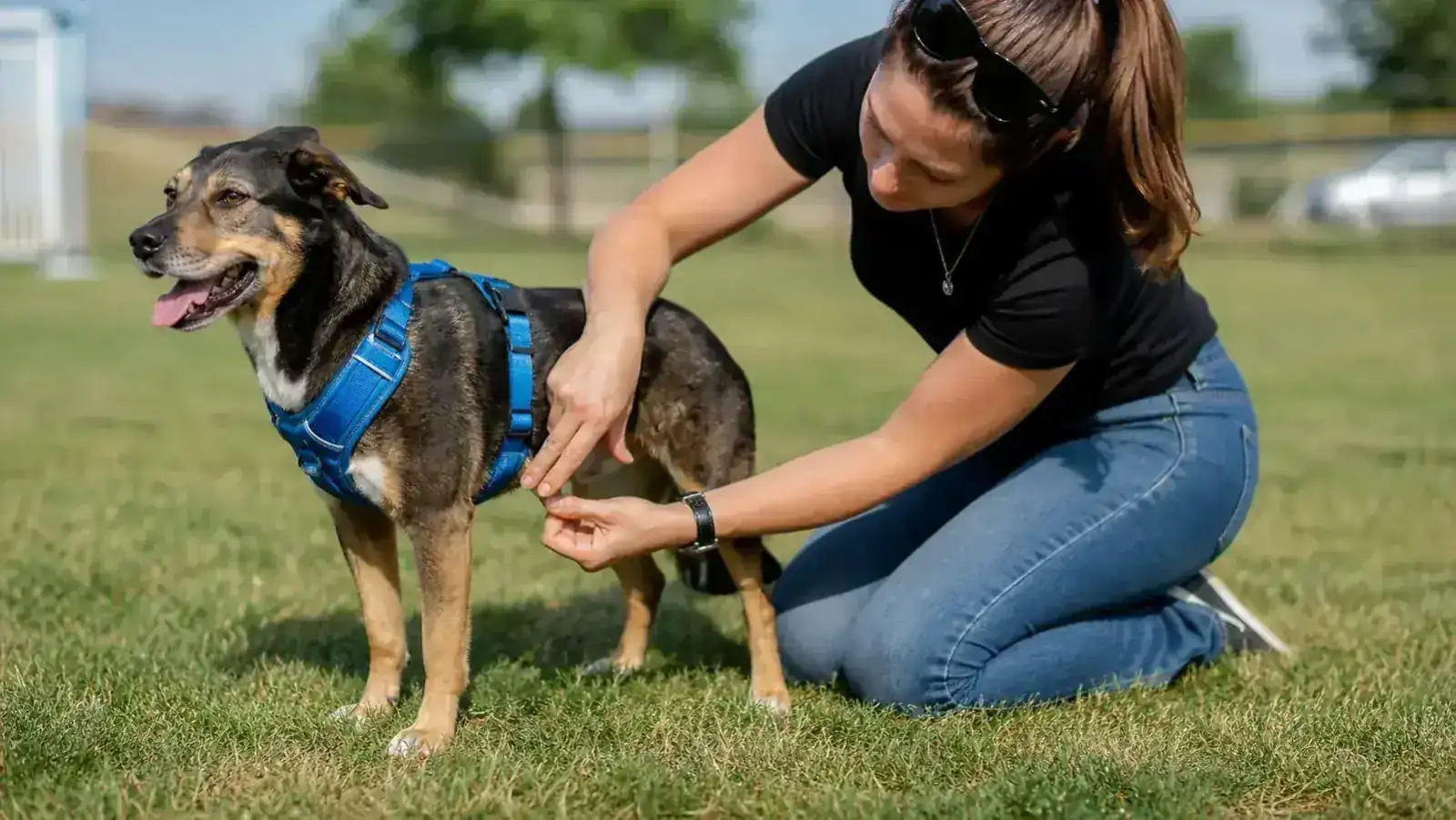
Here is the thing nobody putting a five-star review says out loud: the Easy Walk works through the harness mechanics, not through teaching the dog anything. The moment you put a back-clip harness back on a dog who has only ever learned to walk nicely in the Easy Walk, you will see the pulling come back in some form. The harness is a management tool, not a behavior-change program. The behavior change requires pairing it with consistent leash cues, stop-and-wait routines, or loose-leash training during the same period.
This is not a criticism unique to the Easy Walk. Any no-pull harness works this way. But buyers who read the reviews and expect a standalone transformation will be disappointed when they switch gear or skip the training component. Three of the four adopter follow-ups I did at the one-month mark reported good results. The fourth had stopped doing any loose-leash work and said the harness 'stopped working.' When I asked whether the dog was still in the Easy Walk every day, they said yes but they were not doing the stop-and-wait routine anymore. The harness suppresses pulling. The training eliminates it. You need both.
If you want a step-by-step framework for pairing the Easy Walk with an actual training protocol, check out our guide to stopping dog pulling using a no-pull harness. That piece covers the loose-leash mechanics in detail.
Durability: Honest Assessment Across Different Use Patterns
I have had two Easy Walk harnesses go through our foster program. The first was purchased about 18 months ago and is still in rotation, showing significant color fade on the belly strap and minor fraying at one shoulder buckle edge, but structurally sound. The second is about six months old and looks nearly new because the dogs who have worn it have been smaller and lighter. Weight of the dog matters enormously here. A 22-pound Cocker Spaniel puts very different stress on the hardware than a 74-pound Shepherd mix.
The plastic buckles are the part I watch most closely. After 18 months of heavy rescue use, the buckle on one side of the older harness has developed a slight rattle when clipped but still holds secure. I would not trust a harness with a rattling buckle for a dog above 50 pounds in a high-traffic area. At that point I would replace it. For dogs under 40 pounds, these harnesses will likely outlast what most owners expect from nylon gear at this price.
For an alternative read on how this compares to the tobeDRI design, which uses different buckle hardware and a different chest panel shape, see our PetSafe Easy Walk vs tobeDRI comparison.
What I Liked
- Front-clip chest ring reliably redirects pulling dogs without pain or pressure on the neck
- Color-coded buckles make on/off fast and accurate, even with an excited dog
- Works across a wide weight range from very small to large when the size matches the dog's body type
- Responds well to pairing with basic loose-leash training, producing real improvement within one to two weeks
- Machine washable on cold, lays flat to dry without losing shape
- Price point is reasonable for a harness used daily
Where It Falls Short
- Barrel-chested breeds often fall between Medium and Large with no clean fit option
- Short-coated muscular dogs risk axillary chafing during the early high-pull phase of use
- The mechanism manages pulling but does not teach the dog anything without accompanying training
- Chest ring drifts off-center quickly if belly strap loosens mid-walk, requiring mid-walk adjustments
- Buckle hardware on heavy-use harnesses shows wear at the 12-to-18-month mark with large dogs
Who This Is For
The Easy Walk is the right choice for dogs in the 20-to-75-pound range who pull from excitement rather than reactive aggression, and for owners who are willing to pair it with a few minutes of structured leash work each walk. It is especially good for narrow-to-medium chest profiles, dogs with any length coat other than very short, and owners who need a simple quick-release design they can get on and off without fumbling. New adopters and first-time dog owners do well with it because the color coding removes ambiguity during setup. If your dog fits those parameters, I would not hesitate to recommend it.
Who Should Skip It
If your dog has a wide, deep chest relative to its body length (Bulldog, Boxer, AmStaff, English Bulldog types) and weighs between 40 and 60 pounds, there is a real chance you will not find a size that stays centered without constant mid-walk adjustment. Short-coated muscular breeds who are still in the heavy-pulling phase also need extra monitoring for chafing. And if you want to train loose-leash walking rather than just manage the pulling permanently, be honest with yourself about whether you will actually do the leash work. This tool rewards consistency. It is not a passive fix you can buckle on and forget.
After fitting eight different dogs, the Easy Walk stays in our foster supply bin. That says more than any star rating.
It works cleanly on most body types, holds up to daily use at a fair price, and gives handlers mechanical advantage without hurting the dog. Check sizing carefully before ordering if your dog is a broad-chested breed.
Amazon Check Today's Price on Amazon →