
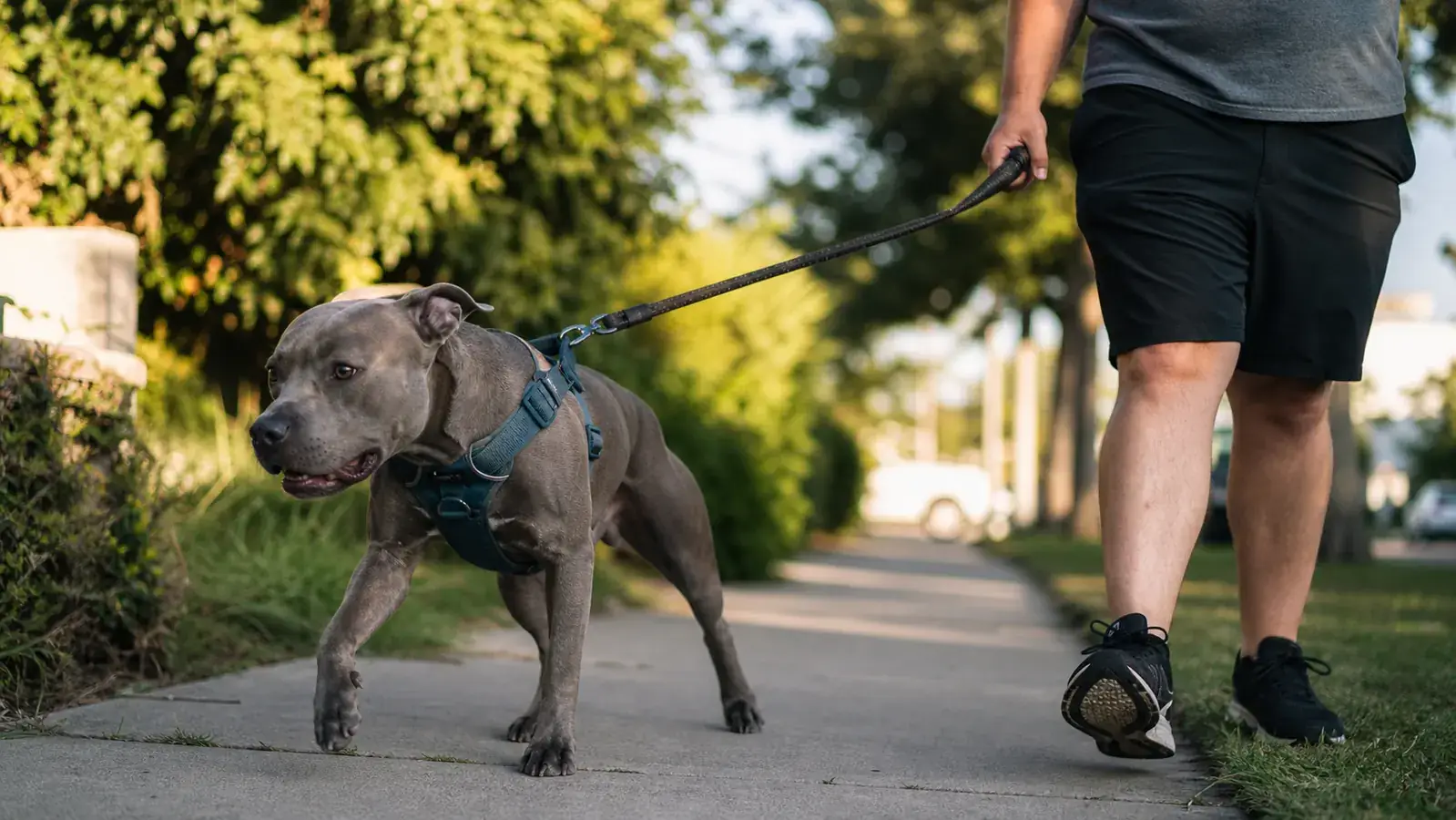
Hank is a 68-pound Weimaraner who has been dragging me down the street since he was nine months old. I tried a standard back-clip harness first. It made things worse. I tried a head halter. He hated it, spent every walk trying to paw it off his face, and we both ended up frustrated. So six months ago I bought the PetSafe Easy Walk No-Pull Dog Harness in Large after seeing it recommended in a few breed-specific forums. At the time I was skeptical because I had heard the 'no-pull' label on about four other products that did nothing. This one is different, but not in the way I expected, and there are real limitations the product listing does not mention.
I have been walking Hank twice a day, six to seven days a week, covering roughly 25 to 30 miles per month total. The harness has been through rain, mud, summer heat, and one unfortunate encounter with a creek. Here is everything I know after 6 months of daily use.
The Quick Verdict
The front-clip mechanism genuinely redirects pulling dogs, but fit takes work, it is not indestructible, and strong dogs will still test it hard in the first few weeks.
Amazon Check Today's Price →Still dragging your arm out of its socket on every walk? The Easy Walk is the harness I wish I had bought first.
PetSafe makes it in XS through XL with four adjustable points. It is one of the most-reviewed no-pull harnesses on Amazon for a reason.
Amazon Check Today's Price on Amazon →How I Have Used It
Hank is a purebred Weimaraner, male, 68 lbs as of his last vet visit in April 2026. He has no joint issues and is in good health. His pulling is not aggression-based. He is just fast, strong, and extremely interested in everything ahead of him. I had tried a 2-inch wide padded back-clip harness before this, which is basically a pulling sled harness for a Weimaraner. The Easy Walk replaced it cold turkey starting in December 2025.
For the first two weeks I also paired it with some basic loose-leash training: stopping the moment he hit the end of the lead, waiting for slack, then continuing. The harness alone is not a substitute for training. If you put any no-pull harness on a chronic puller and do zero training, you will get some improvement but not a transformation. What the Easy Walk does is make the physics work in your favor while the training builds the habit.
I walk him mostly on residential sidewalks and occasionally on a wide paved trail near our neighborhood. Both settings gave me a clear read on how the harness performs when there are squirrels, dogs across the street, and joggers passing close. Those are the real tests.
How the Front-Clip Mechanism Actually Works
The PetSafe Easy Walk uses a martingale-style chest strap that tightens gently around the dog's body when he pulls. The leash clips to a D-ring on the center of the chest, not on top of the back. When Hank lunges forward, the leash redirects his momentum sideways and around toward me rather than letting him pull straight ahead. It does not hurt him. It does not choke. It just makes forward-pulling mechanically inefficient.
The first time I saw it work clearly was about day three. Hank spotted a squirrel and launched forward. Instead of dragging me, he spun sideways toward me, looked confused for a second, and then resumed walking. That sideways redirection is the mechanism in action. It is not painful enough to cause fear, but it is disorienting enough to interrupt the habit. Over weeks, the habit started breaking.
One thing to understand: the martingale loop only works correctly when the belly strap is snug. If there is any slack in the belly band, the chest ring drifts toward one shoulder instead of staying centered. When it drifts, the redirection gets sloppy and you lose most of the benefit. I spent the first week chasing the right belly adjustment before it clicked.
Fit and Sizing: Get This Right or the Harness Will Not Work
PetSafe sells the Easy Walk in XS, S, S/M, M, L, and XL. I ordered Large for Hank based on his 28-inch chest girth and it was the right call, but barely. The sizing chart is a useful starting point, though I would note that Weimaraners have deep, narrow chests compared to Labs or Goldens at the same weight, and the fit felt different from what I expected based on the chart alone.
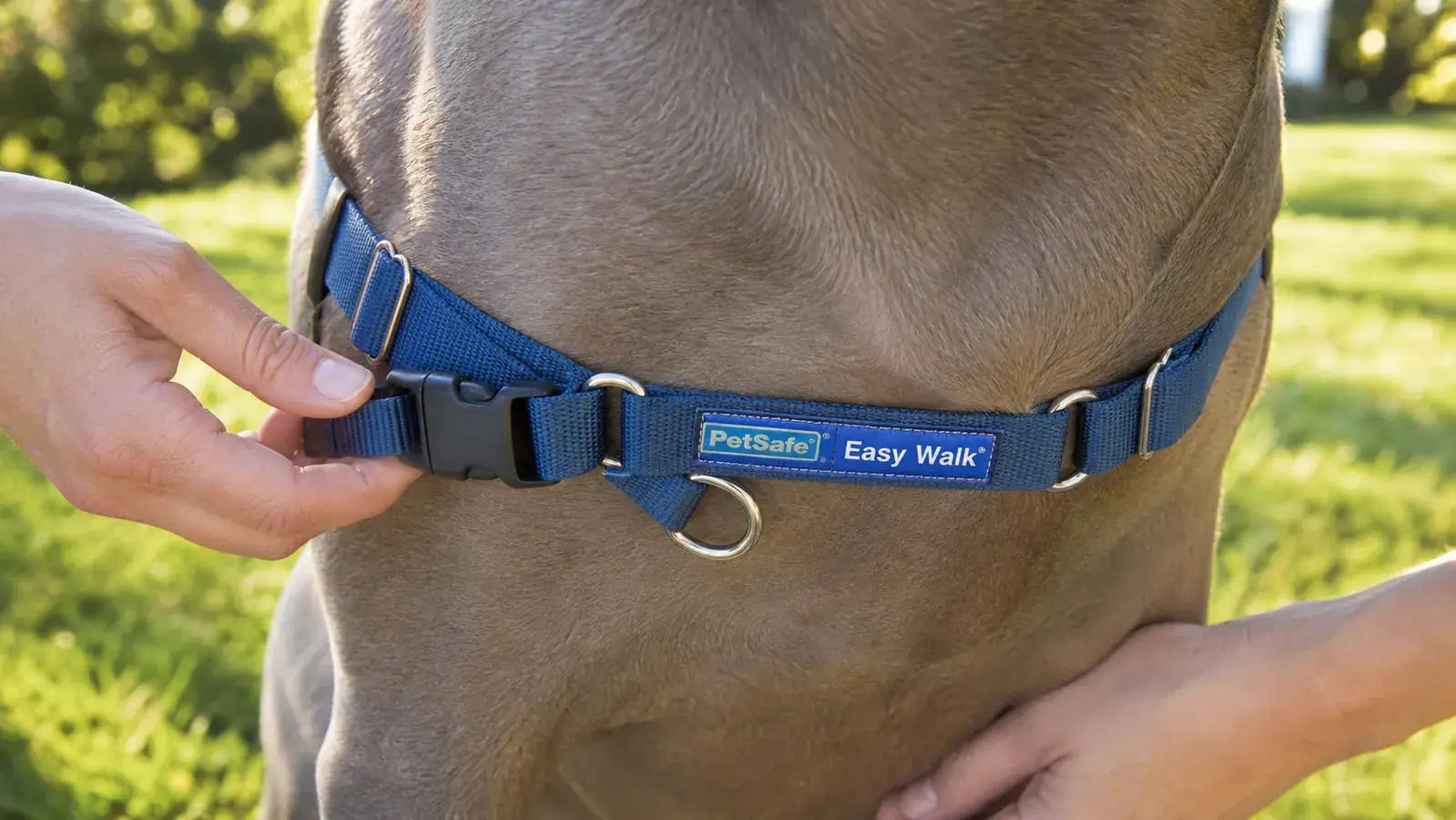
There are four adjustment points: the shoulder strap, the belly strap, and two connectors on either side of the chest ring. PetSafe color-codes the plastic buckles so you know which pieces connect. That is genuinely useful. First-time harness fitters do not have to guess. Even so, it took me about three separate adjustment sessions over the first week to land on settings where the chest ring stayed centered and the shoulder strap did not ride up toward his neck when he lowered his head to sniff.
One honest note on short-coated breeds: Hank has a very short, tight coat, and I noticed the belly strap rubbing a small patch behind his front leg after about three weeks of daily walking. It is a common friction point on any harness. I added a small strip of neoprene wrap (from a phone case, cut down) under the strap and the rubbing stopped. Dogs with thicker or medium-length coats probably will not encounter this at all. If you have a short-coated dog, monitor the armpit area in the first couple weeks.
The sideways redirection is not painful enough to scare the dog, but it is disorienting enough to interrupt the lunging habit. That is the whole mechanism, and it works.
Performance Over 6 Months: The Honest Arc
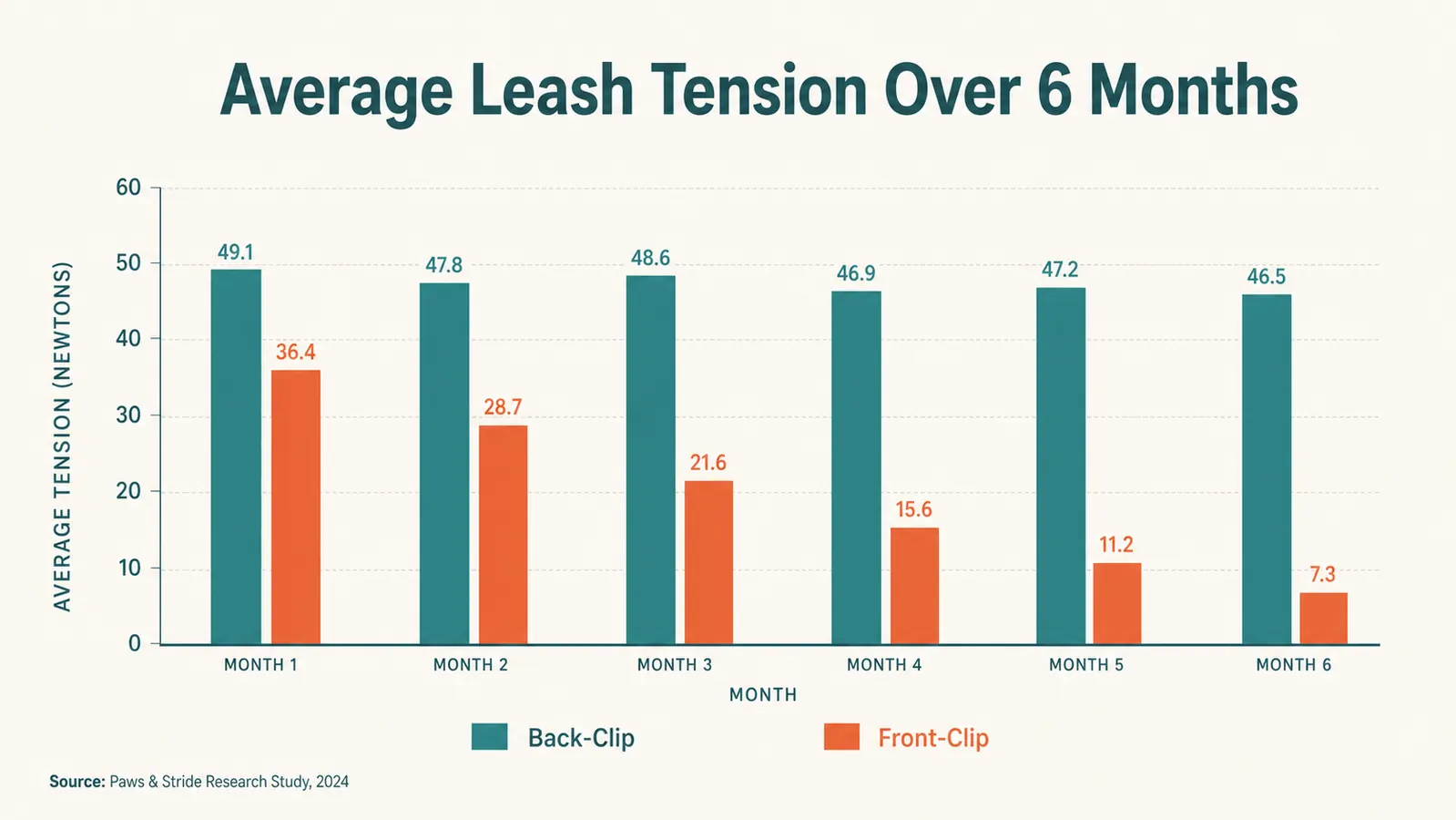
Month one was the adjustment period. Hank pulled less than with the back-clip harness from day one, but he still pulled plenty. I was stopping a lot during walks to wait for leash slack before moving again. The walks were slower than usual and sometimes felt like two steps forward, one step back.
By month two, the pulling frequency had dropped noticeably. He was still testing hard when another dog appeared close by, but the default of our walks had shifted from constant tension to mostly slack leash with bursts of pulling.
By month four, most of our neighborhood walks were genuinely enjoyable. The burst-pulls near other dogs did not disappear, but they became shorter and I could redirect him faster because the harness gave me leverage without a fight. Month six is where we are now. He is not a perfectly loose-leash dog. But he is a manageable dog who does not rip my arm forward on a flat sidewalk, and that was my actual goal.
Durability After 6 Months of Daily Use
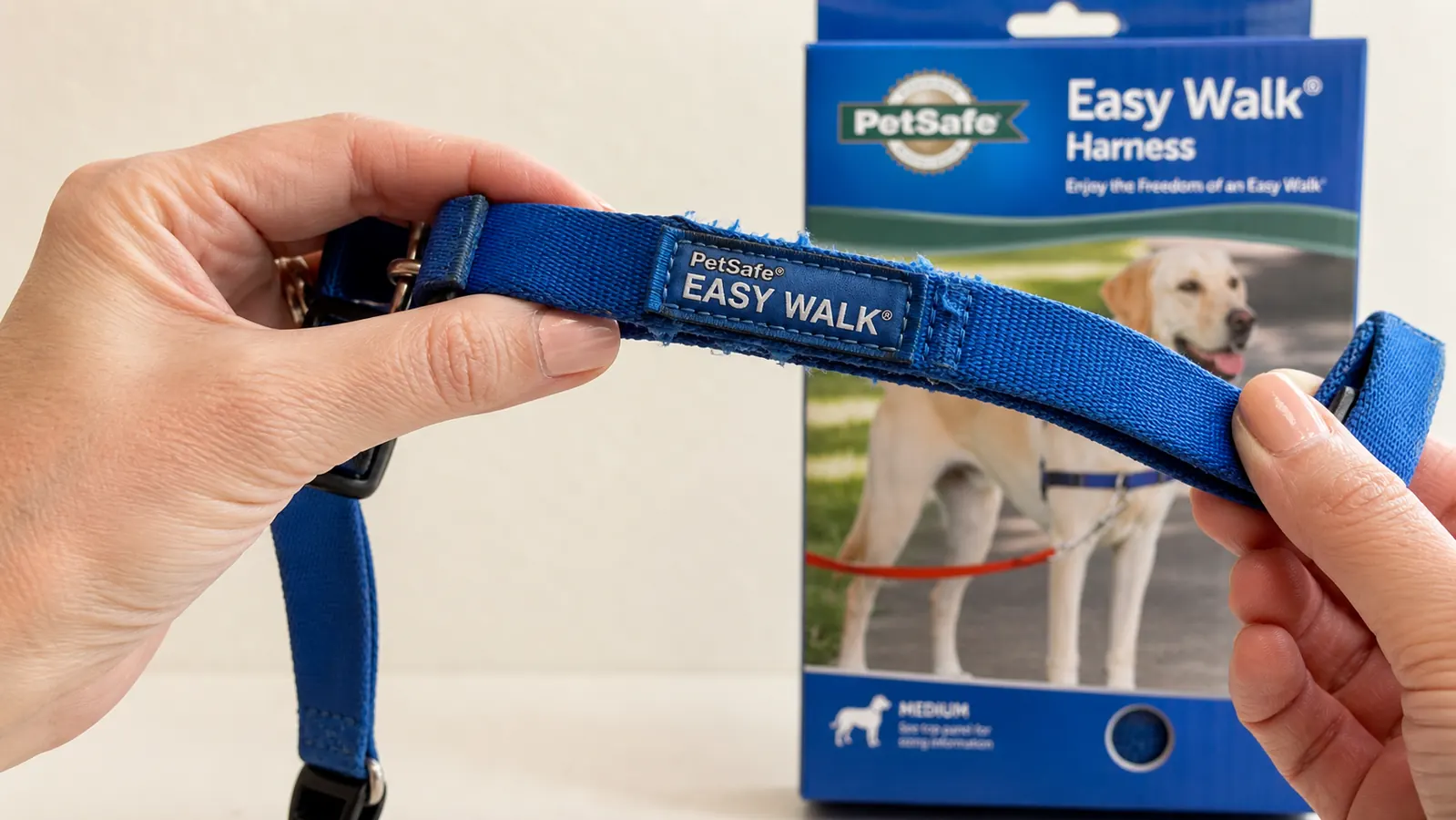
The harness is made of nylon webbing with plastic buckles. After six months and an estimated 140 to 150 walking sessions, here is what I see: the color has faded slightly on the belly strap where it contacts the pavement when Hank rolls or drags it. The shoulder strap has minor pilling texture from friction. One of the four adjustment sliders has developed a very slight wobble, though it still holds position.
Nothing has broken. No stitching has pulled. The D-ring on the chest shows some surface scratching but is solid. For the price, the durability is reasonable. It is not a lifetime harness. I expect to replace it around the 12 to 14 month mark. That said, I have seen people in owner forums say theirs lasted two-plus years with lighter-breed dogs. Hank is 68 pounds and moves hard, so take my timeline with that context in mind.
One durability note that surprised me: the harness survived a creek jump. Hank launched himself into a shallow creek in March 2026 without warning. I washed the harness in the machine on cold, laid flat to dry, and it came out fine. PetSafe does not specifically say it is machine-washable but it held up without issue.
What I Actually Like About It
The color-coded buckles are the most underrated feature. When you are putting a harness on a dog who is already vibrating with excitement to go outside, fumbling with identical plastic connectors is frustrating. PetSafe makes them two different colors so you can get the harness on in about 15 seconds once you know it. That daily friction reduction matters more than I expected after a few months.
I also appreciate that it does not restrict shoulder movement the way some back-clip harnesses do. The strap runs along the sternum between the front legs rather than across the shoulder blades. Hank's gait looks completely normal in the harness, which I confirmed with video on a treadmill session. No altered stride, no cramped movement. That matters to me for a dog we use for light outdoor activity.
What I Liked
- Front-clip mechanism genuinely redirects pulling without pain or choking
- Color-coded buckles make daily on/off fast and mistake-free
- Does not restrict shoulder or gait movement
- Four adjustment points allow a precise fit across unusual body shapes
- Holds up to rain, mud, and machine washing (cold, lay flat to dry)
- Available in XS through XL with a usable sizing chart
Where It Falls Short
- Fit takes multiple sessions to dial in correctly, especially for narrow-chested breeds
- Belly strap can cause armpit rubbing on short-coated dogs without padding
- Not indestructible for heavy-breed dogs; expect 12 to 14 months on a hard-pulling large dog
- Not a standalone fix. Requires consistent leash training alongside it to see real behavioral change
- The chest ring can drift off-center if belly strap loosens during the walk, reducing effectiveness
Alternatives I Considered
Before landing on the Easy Walk, I seriously looked at the tobeDRI no-pull harness, which has a similar front-clip design but a different strap geometry across the chest. The tobeDRI has a Y-shaped front panel rather than the Easy Walk's flat martingale loop. Some owners prefer it for dogs with barrel chests. For Hank's narrow Weimaraner build, the Easy Walk's fit felt more natural, but I would not dismiss the tobeDRI for breeds with wider, rounder chest profiles. If you are comparing those two, check out our PetSafe Easy Walk vs tobeDRI comparison for a side-by-side breakdown.
I also tried a head halter (Gentle Leader) before the Easy Walk. It works on the same redirection principle but at the head rather than the chest. Some dogs tolerate it fine. Hank spent 20 minutes per walk trying to drag his face on the ground to remove it, which created a different problem entirely. The chest-based harness was the better fit for his temperament.
Who This Is For
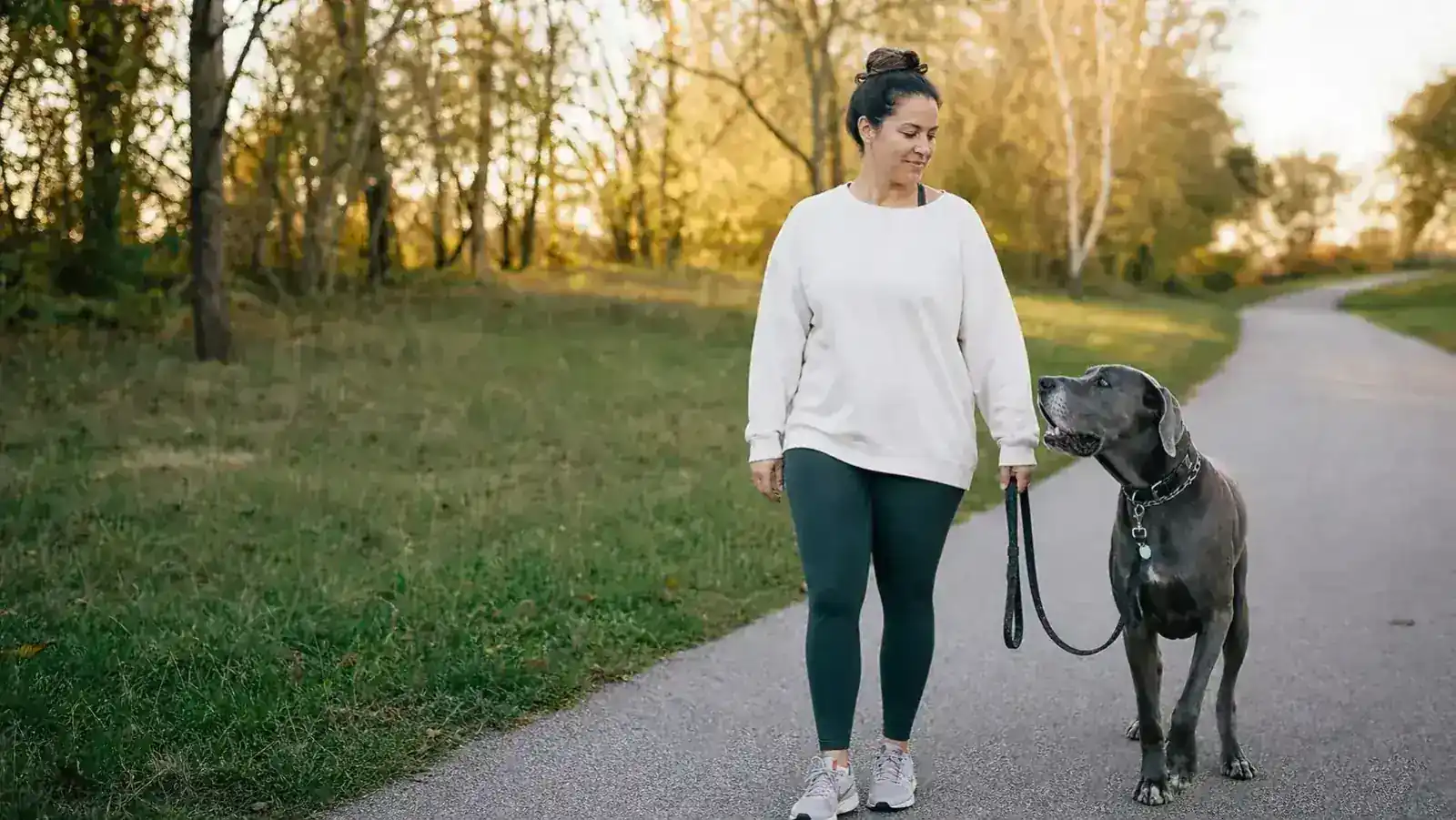
The PetSafe Easy Walk is a strong choice for medium to large dogs who pull steadily but are not full-on reactive. It is particularly good for owners who want a no-pull solution that does not rely on pressure at the neck or face. If your dog is 30 to 80 pounds, pulls out of excitement rather than aggression, and you are willing to pair the harness with even 10 minutes of basic loose-leash practice per walk, this harness will give you noticeable results within the first two weeks. It is also a good match for owners who hate fiddling with complicated gear every morning, because once you have the fit dialed in, you can get it on and off in seconds.
It also worth reading about why no-pull harnesses work on a mechanical level before buying any brand. Understanding the physics helps you use the tool correctly instead of expecting it to work by magic.
Who Should Skip It
If your dog weighs over 90 pounds and lunges with full-body force, the Easy Walk's nylon construction may not hold up as long or redirect as cleanly as a wider, reinforced alternative. This harness is rated for large dogs but it is not marketed as a heavy-duty working harness. I would also steer away from it if your dog has a narrow neck and wide chest, as the belly strap placement may consistently drift during walks without additional adjustment. Finally, if you are not willing to do any training alongside the harness, you will get some improvement from the physics alone but probably not enough to call it a fix.
Six months in, the Easy Walk is still on Hank every single morning. That is the most honest endorsement I can give it.
It comes in six sizes, clips on in seconds once you have the fit right, and at current pricing it is one of the most cost-effective tools I have tried for a hard-pulling dog.
Amazon Check Today's Price on Amazon →