

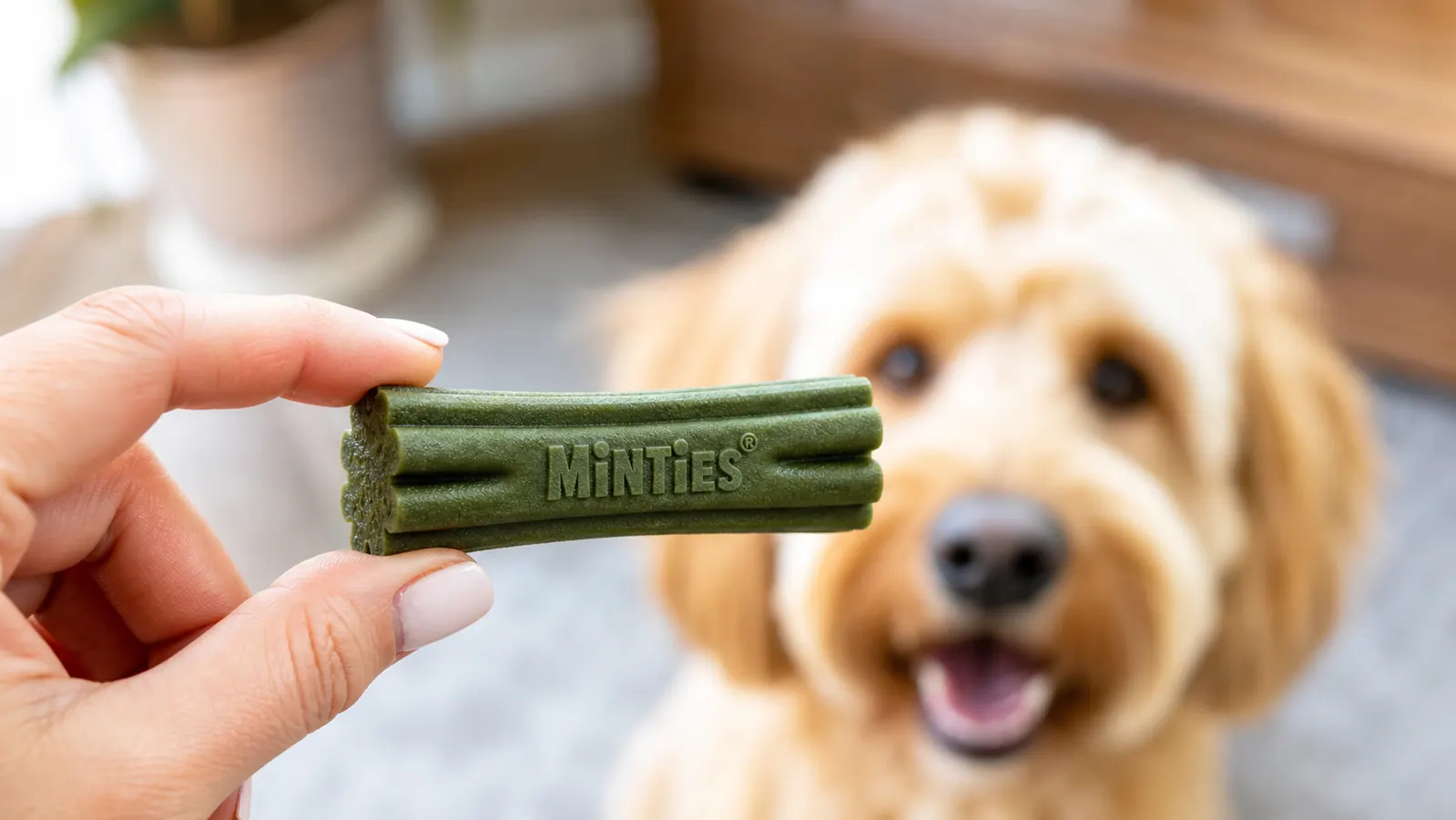
My dog Biscuit is a 42-pound Beagle mix with the single-minded focus of a dog who treats every edible thing as a competition. So when I first tossed her a Minties dental chew, she swallowed it in under 20 seconds. I timed it. I had just paid for a bag of 40 chews that were supposed to clean her teeth through mechanical chewing action, and she consumed the first one faster than I can eat a cracker. That experience sent me down a rabbit hole about Minties that I want to share before you toss one to your own dog without thinking twice.
I want to be clear up front: I still use Minties. They are one of the better dental chews on the market at this price point, with a 4.5-star rating across more than 36,000 reviews for a reason. But there is a specific set of things the packaging glosses over that are genuinely useful to know before you start. Most reviews skip straight to 'my dog loved it and his breath smells better.' This one doesn't.
The Quick Verdict
Minties work well for dogs who actually chew, but if your dog gulps treats, size up and supervise. Good value, real dental benefit, a few caveats worth knowing.
Amazon Check Today's Price →If your dog's breath could peel paint, this is the cheapest daily fix that actually works.
Minties Dental Chews are budget-friendly for 20 chews and have more than 36,000 reviews. Check today's price and size options on Amazon.
Amazon Check Today's Price on Amazon →How I've Used Minties and What Went Wrong First
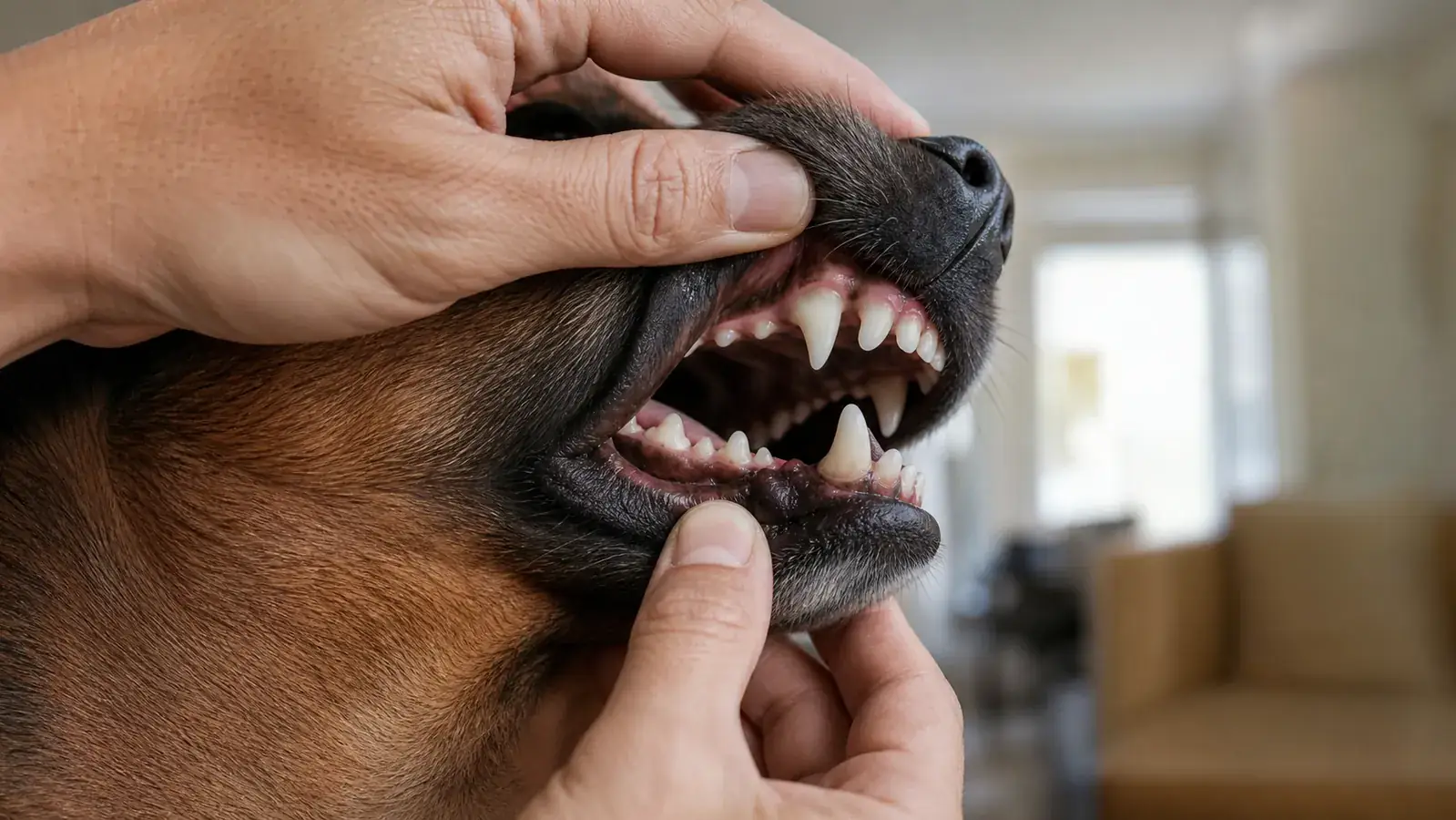
I started giving Biscuit Minties about eight months ago. She is 5 years old, 42 pounds, and her vet flagged mild tartar buildup along her back molars at her last checkup. I was not ready to sign up for an anesthesia dental cleaning that runs several hundred dollars, so I went looking for a daily chew routine I could actually stick to. Minties kept coming up in searches and in the vet office waiting room, so I bought the medium-size bag.
The first week I gave them to her the way you might give a dog any treat: I tossed it to her and walked away. Big mistake. Biscuit would chomp it twice and swallow. When I looked up the feeding guidelines on the bag, it says to supervise your dog and ensure they are chewing. That is useful advice buried on the back of the bag in small print. I started handing the chew to her and making her sit and actually work it. The difference in chew time was significant: under 30 seconds unsupervised, versus two to three minutes when I handed it to her directly and let her settle on her bed with it.
That difference matters for the dental benefit. The whole mechanism of how dental chews reduce plaque is mechanical abrasion: the chew has to actually rub against the tooth surface while the dog gnaws it. A dog who swallows the thing whole gets zero dental benefit and just a calorie hit. So step one with Minties, before anything else, is figuring out how your dog eats treats. Everything downstream depends on that answer.
The Calorie Problem Nobody Talks About
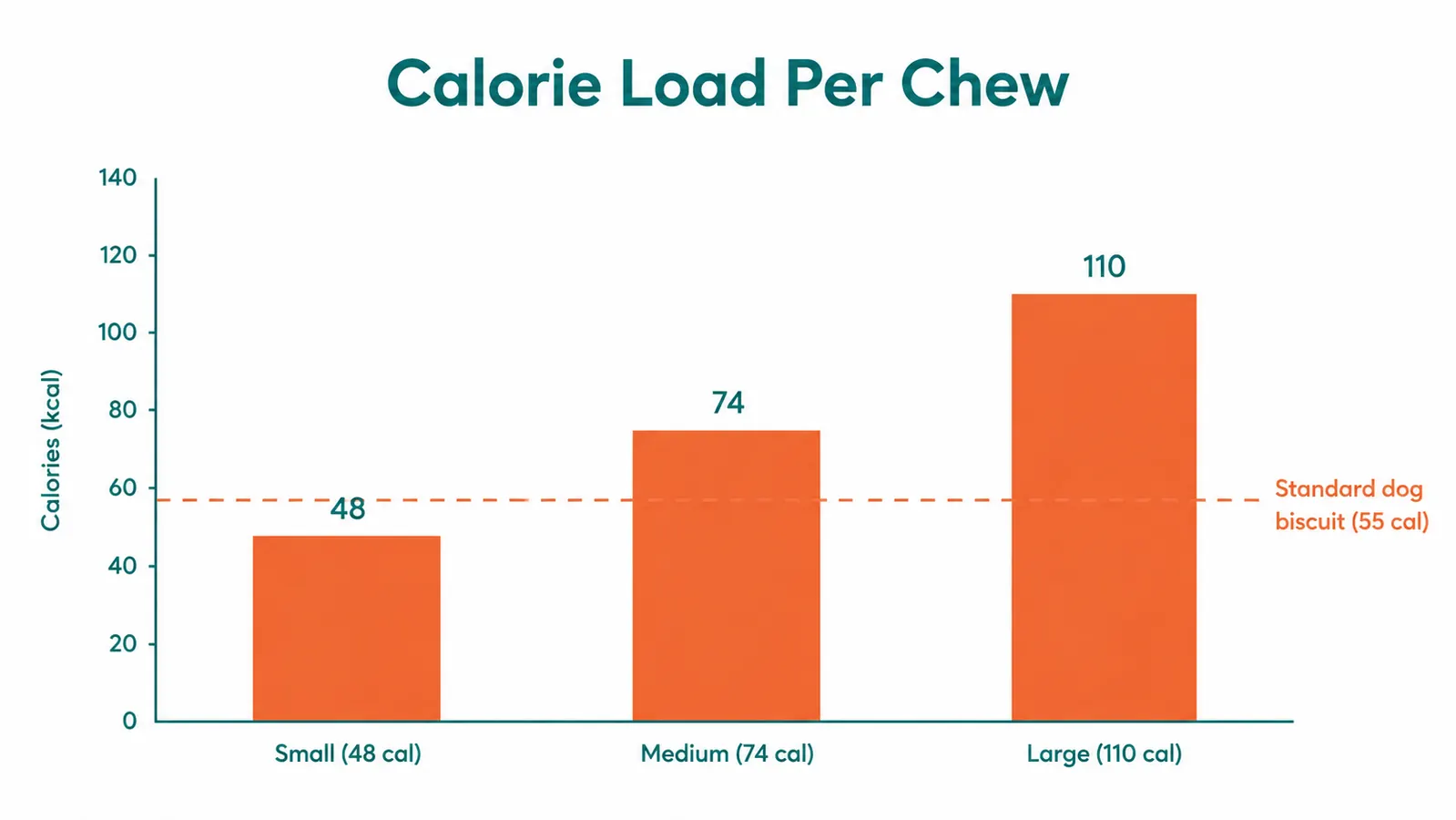
This is the thing that surprised me most and that I almost never see mentioned in reviews. Minties dental chews are not zero-calorie or even low-calorie. The medium chew, which is what Biscuit gets, clocks in at roughly 74 calories. The large size is around 110 calories. The small is about 48. For context, a standard commercial dog biscuit runs 40 to 55 calories. So if you are handing your dog a large Minties every day on top of their normal meals, you are adding the caloric equivalent of a bonus biscuit to their daily intake.
For a 70-pound dog with a high activity level, that is rounding error. For a 12-pound Dachshund or a 20-pound Beagle who is already on a weight management food, that daily chew might represent 10 to 15 percent of their daily calorie budget. Biscuit is lean and active, so it was not a crisis for us. But I know owners of senior dogs and smaller breeds who are counting calories carefully, and they genuinely did not know a dental chew could carry that kind of caloric weight. If your dog is on a diet, reduce their dinner portion slightly on days they get a Minties. Even just a small scoop less of kibble keeps the daily total in range.
You can also split the cost and calories by cutting the chew in half for smaller dogs and giving the second half the following day. It changes the chewing experience slightly but does not eliminate the dental benefit entirely. Just factor it into your routine from the start rather than discovering it three months in when your dog has put on a couple of pounds.
The Sizing Pitfall That Trips Up Most Buyers
Minties come in three sizes: small for dogs under 25 pounds, medium for 25 to 50 pounds, and large for 50 pounds and up. The size guidance sounds simple, but it hides a real problem: a lot of the one-star and two-star reviews complaining that Minties are 'too small' or 'my dog ate it in two seconds' are from people who bought the wrong size. If you have a 24-pound dog who chews aggressively, the small will be gone in seconds. The medium is technically outside the label's weight range for that dog, but it will require them to actually chew to get through it.
My practical rule: go one size up if your dog is an enthusiastic chewer, a gulper, or a large-headed dog sitting near the bottom of a weight range. The only real cost of going up a size is the extra calories, which you can offset by trimming the meal portion slightly. The cost of going too small is that the chew disappears before it does anything useful for the teeth.
Also worth flagging: do not give these to a dog who destroys hard toys by splitting them into shards. Minties are a soft chew, not a hard biscuit, and they are not designed for power chewers who crack elk antlers and split nylon bones. For that type of dog, you want an enzymatic dental gel applied with a brush, or a vet-recommended hard rubber chew toy. A soft dental treat will not hold up, and the fragments could create a choking risk if the dog reduces them quickly.
A dog who swallows the thing whole gets zero dental benefit and just a calorie hit. Figure out how your dog eats treats first. Everything downstream depends on that answer.
What the Ingredients Actually Say
The Minties ingredient list is longer than I would prefer, but it is not alarming once you look at it carefully. The first few ingredients are rice flour, oat flour, and glycerin, which are standard carriers in soft dental chews across most brands. You also get spearmint and peppermint oil, which do the actual breath-freshening work and are the reason you notice a difference in dog breath within the first couple of weeks. Zinc sulfate shows up further down the list, and it has real evidence behind it for inhibiting the bacteria that form plaque.
What Minties does not have is chlorhexidine, which is the gold-standard antibacterial agent found in prescription veterinary dental rinses. That is a notable gap if you are dealing with advanced gingivitis or early periodontal disease. For those situations, a vet rinse or gel with chlorhexidine is the appropriate first step, not an over-the-counter chew. For routine daily maintenance in a dog with healthy but imperfect teeth, the absence of chlorhexidine is not a dealbreaker. It just means you are getting a good preventive tool, not a treatment.
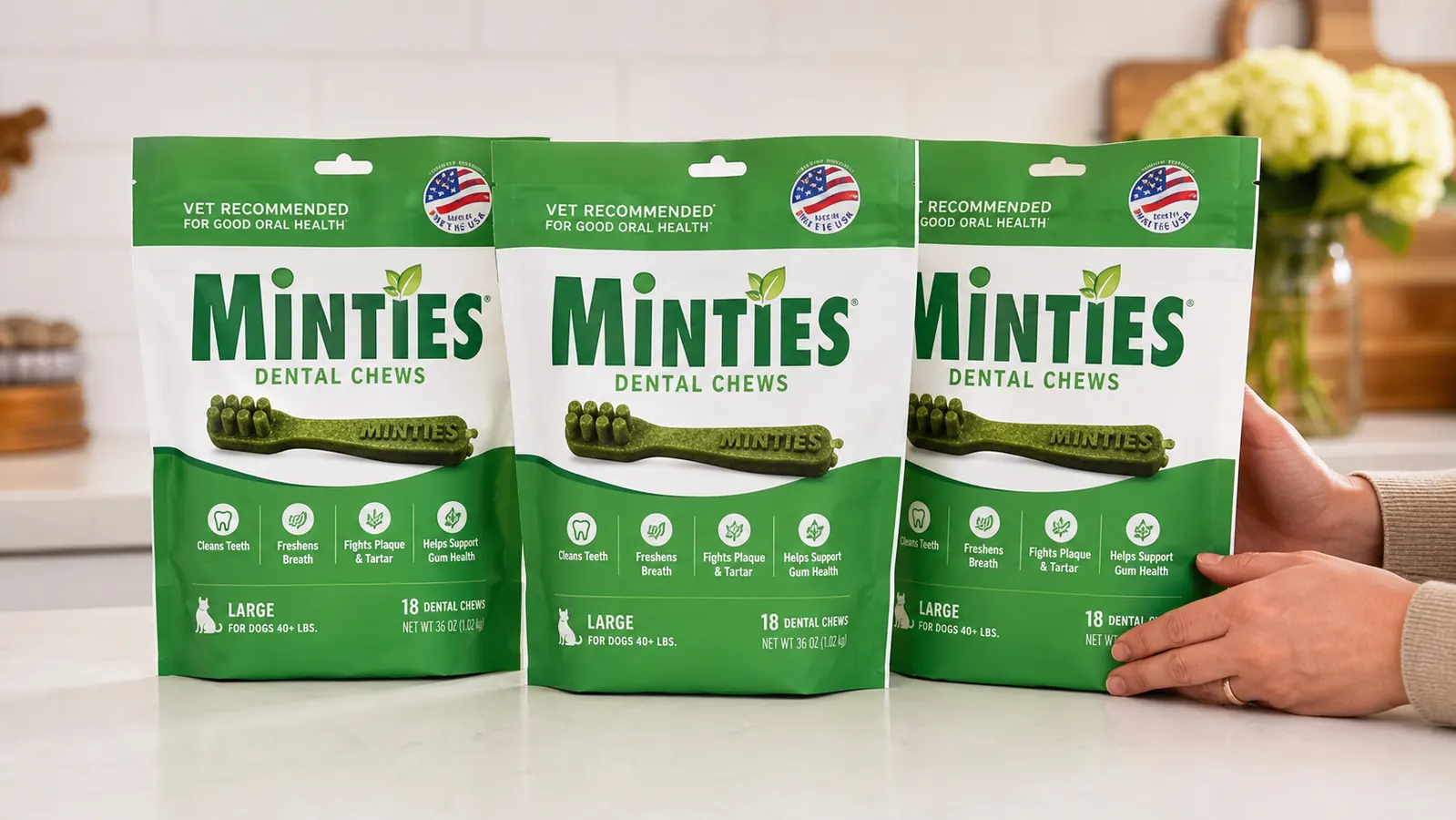
One ingredient worth flagging for sensitive-stomach dogs: Minties contain sorbitol, a sugar alcohol used as a sweetener. Some dogs tolerate it without any issue. Others develop soft stools or loose digestion, particularly in the first few days. Biscuit had no reaction at all. But I have seen enough comments from other owners to treat it as a real consideration. If your dog already has a touchy digestive system, try one chew and wait 24 hours before committing to a daily routine. The VOHC, or Veterinary Oral Health Council, had not awarded Minties their seal of acceptance as of my last check. The bag says 'vet recommended,' but that phrase is a marketing statement, not a third-party certification. It is worth knowing the difference.
What Minties Does Well
Here is where I want to be fair, because the pitfalls above do not erase the genuine upside. Biscuit took to Minties immediately. She knows the crinkle of that green bag and comes running from the other room. That palatability matters more than people realize: a dental chew your dog refuses to eat is useless, and I have had that experience with other brands that are technically superior on paper but smell strange to dogs or have a texture they reject after one try.
The texture hits a useful middle ground: firm enough to require chewing but not so hard that it risks tooth fracture in a dog with normal teeth. Biscuit spends about two to three minutes on hers when I give it to her properly, and I can see her working it along her back teeth where the tartar had been building up. That contact time is what makes the mechanical cleaning actually happen. A softer chew would compress too easily and slide over the tooth surface. A harder chew could chip a tooth. The Minties texture lands in the right zone for a dog with typical adult teeth and normal bite pressure.
At the current price per chew, Minties cost around half a dollar per daily serving for the medium size. That is meaningfully cheaper than most dental chews in the same category, and it is affordable enough that you can stick with it every single day rather than stretching the bag and dosing sporadically. Consistency is what makes dental chews produce real results. A product you use daily at this price is more valuable than a premium product you use three times a week because it costs twice as much.
What I Liked
- Dogs take to the mint flavor readily. Palatability is among the best in the category
- Firm-chewy texture requires actual chewing for most dogs, which drives real mechanical cleaning action
- Affordable per chew for the medium size, making a daily routine affordable enough to sustain
- Genuine breath improvement from spearmint and peppermint oils, often noticeable within one to two weeks
- Zinc sulfate in the formula provides evidence-based antibacterial support for plaque control
Where It Falls Short
- Calorie load is meaningful at 74 cal for medium. Needs to be accounted for in the daily food budget
- Gulpers and fast eaters can swallow the chew before it does anything for their teeth
- No VOHC seal of acceptance. The 'vet recommended' label is a marketing phrase, not a certification
- Sorbitol content can cause loose stools in dogs with sensitive digestion
- Soft texture is not appropriate for aggressive power chewers who destroy hard toys or split nylon bones
Who This Is For
Minties are the right choice for owners who want a simple, affordable daily dental routine for a dog who is a moderate chewer. If your dog is between 10 and 90 pounds, has a normal or mildly sensitive stomach, and will actually sit with a chew for a couple of minutes rather than inhaling it, Minties will earn their place in the routine. They are also a solid fit for owners who travel or board their dogs frequently: they are small, they do not smell strongly in a bag, and every dog I have seen try them was willing to eat them. That is not true of every dental product on the market.
Who Should Skip It
Skip Minties if your dog is a confirmed gulper who swallows everything in two bites and you cannot be there to supervise. Skip them if your dog has a consistently sensitive stomach that reacts to sugar alcohols or new treats. Skip them if your dog has active periodontal disease, which requires veterinary intervention and not just a daily chew. Skip the medium size specifically if your dog is over 50 pounds: the large exists for a reason, and undersizing your chew just wastes the dental contact time. And skip Minties entirely if your dog is a power chewer who destroys hard toys, because the soft texture will not hold up and the fragments could cause choking. If none of those situations describe your dog, a bag of Minties is worth trying. For more on building a complete dental routine beyond just daily chews, see our guide to improving your dog's dental health with dental chews.
Know your dog's size, supervise the first few chews, and Minties will do the job they are supposed to do.
The medium bag covers 20 days of daily chews for a dog in the 25-50 pound range. Check today's price and pick the right size for your dog on Amazon.
Amazon Check Today's Price on Amazon →