

My dog Biscuit is a 4-year-old beagle mix, 28 pounds, adopted from a shelter two years ago. She came with a history: noise-reactive, panting through every thunderstorm, and so wound up at the vet that a simple annual exam took two techs and a lot of patience. I tried the thunder shirt. I tried white noise. I tried sitting on the floor with her at midnight during Fourth of July. None of it was enough on its own.
What actually made a difference was calming chews used the right way, meaning correct timing, correct dose, and paired with some basic behavior work. Not calming chews handed over 5 minutes before the fireworks start, which is a very common mistake and one I made myself at first. This guide covers the exact protocol I now use with Biscuit, built around VetriScience Composure Calming Chews (ASIN B001WN581U), with notes on what works for situational anxiety versus ongoing daily anxiety.
Your dog is already stressed. Get the chews that work while there's still time to dose correctly.
VetriScience Composure has 17,829 Amazon reviews and is one of the few calming supplements with published clinical data behind its active ingredients. At a budget-friendly price for 30 chews, it costs less than a single vet visit and works for most dogs within 30 to 60 minutes.
Amazon Check Today's Price on Amazon →What Calming Chews Are Actually Doing (And What They Cannot Do)
VetriScience Composure uses three active ingredients: Thiamine (Vitamin B1), C3 Colostrum Calming Complex, and L-Theanine. Thiamine supports the nervous system and is depleted during stress. Colostrum calming complex is a bioactive protein fraction that modulates stress response at the neurological level. L-Theanine is the amino acid in green tea that promotes alert-but-calm states without sedation. None of these ingredients knock your dog out. They take the edge off by supporting the dog's own stress-response systems.
That distinction matters because it sets realistic expectations. Composure is not going to turn a 7 out of 10 anxiety dog into a 0. On a bad storm or an especially loud fireworks night, Biscuit still pants a little. What has changed is she is a 4 now instead of a 7, and at a 4 she can actually take treats and respond to cues, which means our training work can happen instead of her just white-knuckling through it. The chews create a window. You still have to do something with the window.
Step 1: Identify What Type of Anxiety Your Dog Has
Before you dose anything, know what you are dealing with. Situational anxiety is triggered by a specific event: thunderstorms, fireworks, car rides, vet visits, grooming, guests in the house. The dog is generally fine otherwise. This is the easiest type to address with calming chews because you can predict the trigger and time the dose correctly.
Generalized or separation anxiety is a different animal. If your dog is anxious most of the time, destructive when left alone, or has been diagnosed with a clinical anxiety disorder, calming chews alone are not going to resolve it. They may help take the edge off while you work with a behaviorist, but daily use as a standalone fix is not the right frame. In those cases, talk to your vet first. Some dogs need prescription medication alongside behavior modification, and a calming supplement may or may not be appropriate as an adjunct.
The steps below are written for situational anxiety, which covers the majority of anxious dogs.
Step 2: Read the Label Dose, Then Confirm for Your Dog's Weight
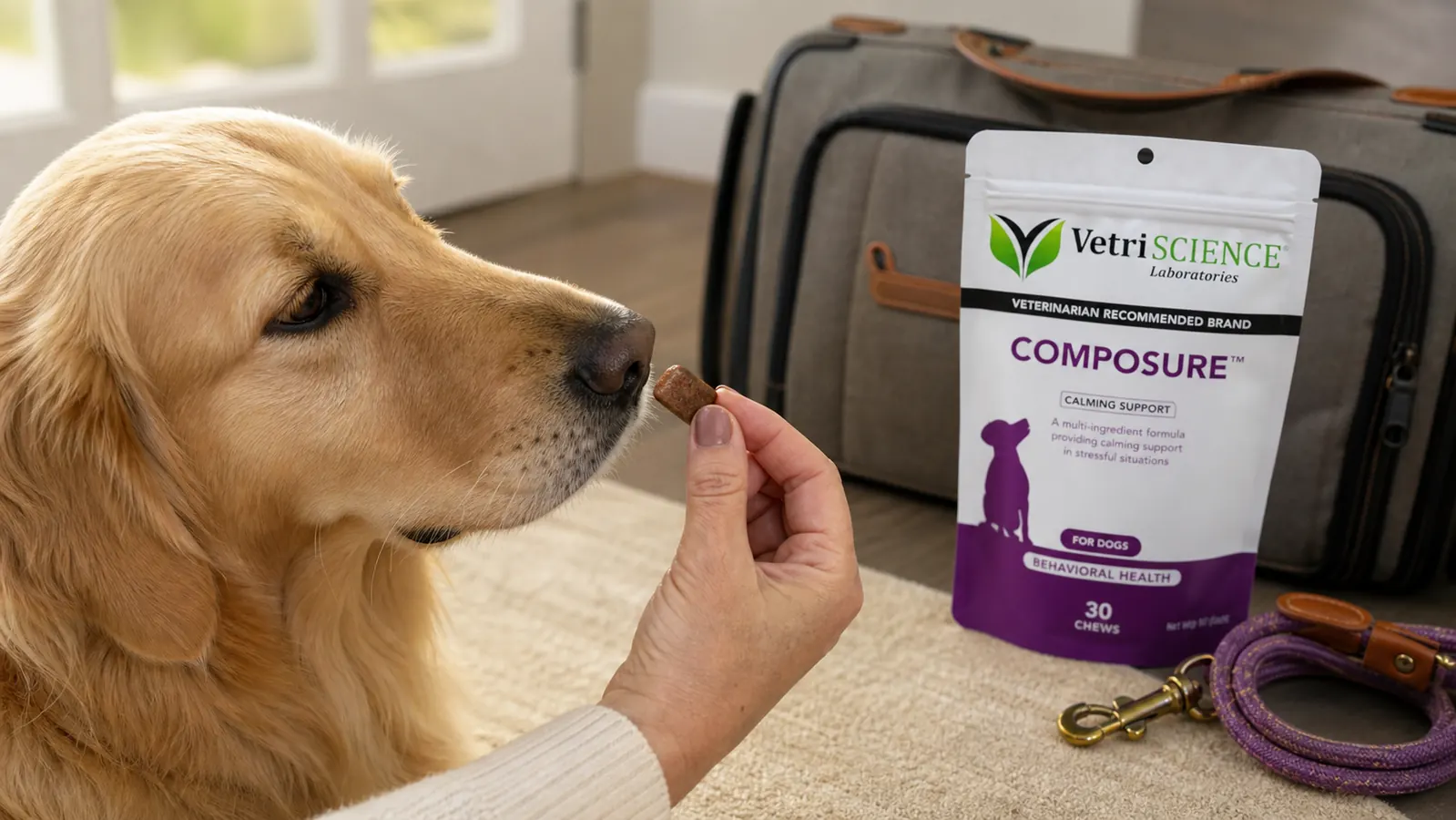
VetriScience Composure gives a straightforward weight-based dosing guide on the bag. For most dogs under 25 pounds, the starting dose is 1 chew. Dogs 26 to 75 pounds typically take 2 chews. Dogs over 75 pounds start at 3 chews. For a high-stress event like Independence Day fireworks or a veterinary procedure, VetriScience explicitly notes you can double the standard dose. That is not me telling you to over-dose your dog. That is the manufacturer's own label guidance for high-anxiety events.
Biscuit is 28 pounds. I give her 2 chews for routine stress events, 3 chews when I know it is going to be a bad storm or a holiday with heavy fireworks. She has never had an adverse reaction. The chews are soft and chicken-flavored, and she eats them like treats, which makes dosing easy. If your dog is picky, try tucking them inside a piece of deli turkey or a small smear of peanut butter.
Step 3: Get the Timing Right (This Is the Part Most People Mess Up)
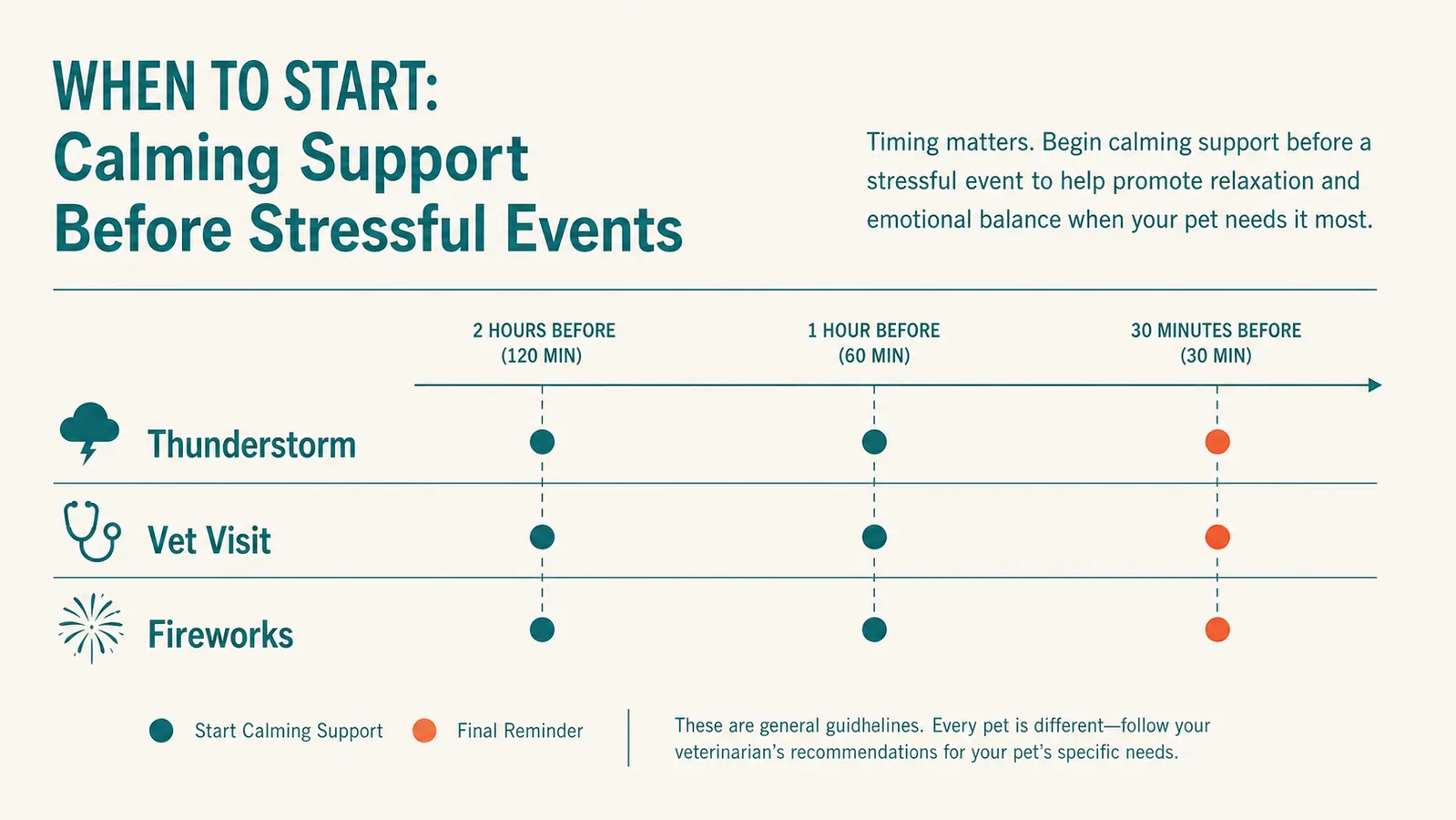
This is where most people fail, including me when I started. Calming chews are not fast-acting in the same way that Benadryl or a sedative is. The active ingredients, especially L-Theanine and the colostrum complex, need time to be absorbed. The general window is 30 to 60 minutes before a stressor. For high-stakes events, I aim for 45 to 60 minutes out.
For thunderstorms, check the radar. If a cell is 40 minutes away and building, that is your cue to give the chews now, not when you can hear thunder. By the time your dog is visibly stressed, you have already lost the window and the chews will work less effectively because the stress hormones are already elevated.
For vet visits, give the dose at home before you leave, not in the parking lot. The car ride is already a stressor for many dogs, so you want the chews active before the dog is even in the car. I give Biscuit her chews about 45 minutes before we need to leave, which means she is calm during the drive and already settled when we walk into the exam room.
For fireworks, July 4th and New Year's Eve are predictable. Do not wait for the first boom at 9 pm. Give the chews at 7:30 or 8 pm and let your dog settle somewhere quiet before the noise starts. Once a dog hits full panic, you are fighting uphill.
Step 4: Create the Right Environment Alongside the Chews
The chews do not work in a vacuum. If you give Biscuit her Composure chews and then leave her loose in the living room with the TV off and the windows uncovered during a storm, she is still going to struggle. The supplement lowers the baseline, but the environment determines whether that lower baseline is enough.
My setup during storms: she gets her chews, then we go to the bedroom, I close the curtains so she cannot see the lightning, I turn on a box fan for white noise, and I stay calm. Dogs read our body language. If you are tense, hovering, or talking to them in an anxious soothing voice, you are actually signaling to them that there is something worth being scared of. Calm, matter-of-fact behavior from you matters as much as anything in the bottle.
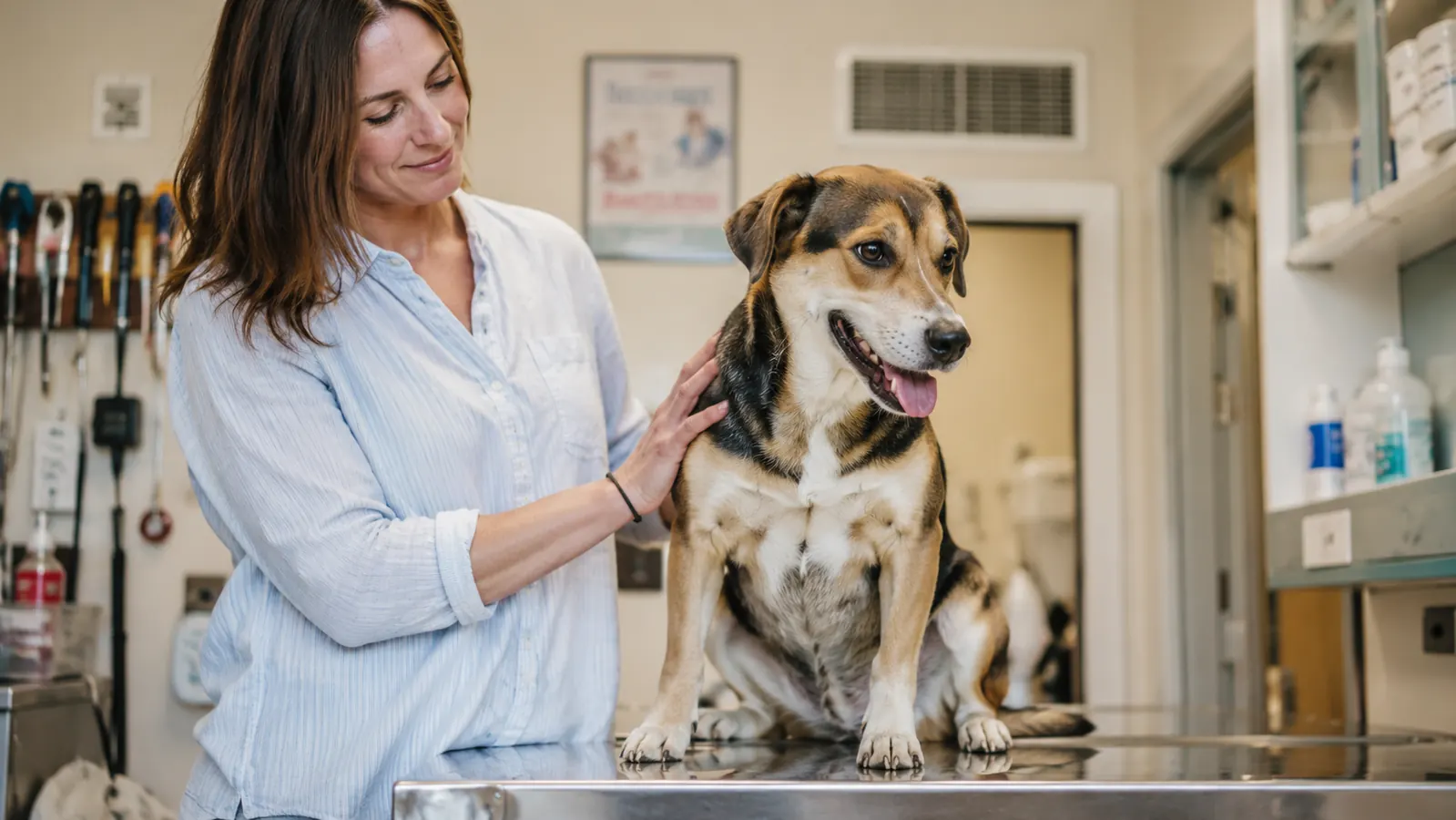
For vet visits specifically, bring high-value treats your dog only gets at the vet. I use tiny pieces of real chicken. The idea is to keep creating positive associations with the environment, and the calming chew makes it possible for the dog to actually be receptive to those positive things instead of being so flooded with fear they cannot think.
Once a dog hits full panic, the chews are fighting uphill. Timing at 45 to 60 minutes before the trigger is the single biggest factor in whether calming chews actually work.
Step 5: Pair Chews With Basic Desensitization Work Between Stressful Events
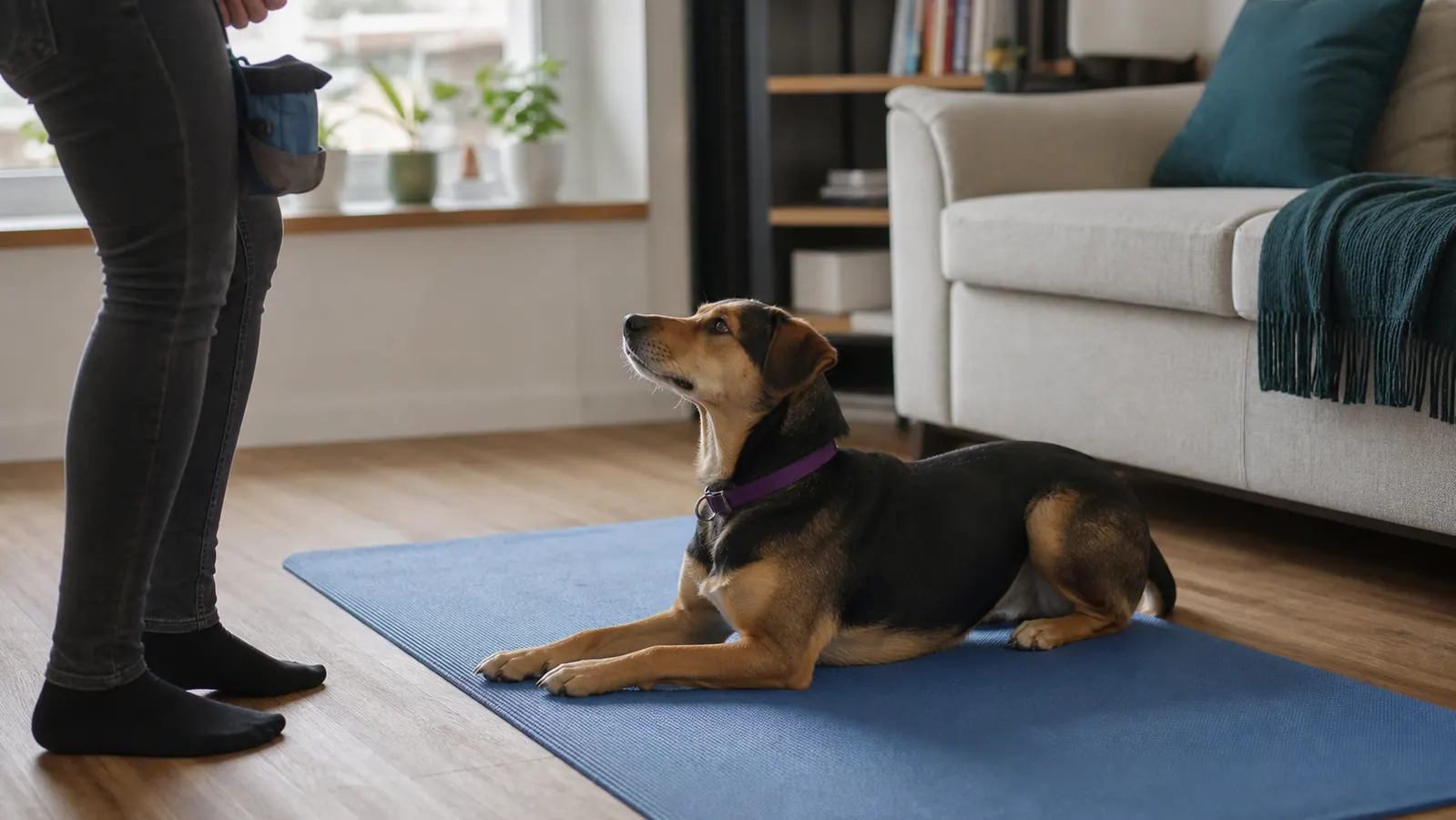
This step is optional but it is the difference between chews being a band-aid and chews being part of a longer-term improvement plan. Desensitization means gradually exposing your dog to the thing they fear at a very low level, low enough that they are not reactive, and pairing it with something good.
For storm phobia, there are YouTube videos of thunderstorm sounds. Start at very low volume, so low your dog barely notices, and give treats the entire time. Over weeks, slowly increase the volume, always keeping the dog below their reaction threshold. This is called counter-conditioning. VetriScience Composure can support this work on training days when you are doing longer or more intense sound exposures. The calming chew helps the dog stay below threshold so the learning can happen, rather than the dog shutting down in fear.
For vet anxiety, ask your vet about Happy Visits, where you bring the dog in just to get weighed and get treats with no exam, no needles, no stress. A few of those visits, combined with calming chews on actual exam days, can genuinely shift how a dog feels about the vet over time. Biscuit went from needing to be muzzled at checkups to sitting fairly calmly on the table. It took about four months of consistent work.
Step 6: Track What Works and Adjust Dose if Needed
Keep a simple log for the first month. Note the trigger, the dose, the timing, and a rough anxiety score for your dog from 1 to 10. This gives you real data instead of going on gut feel. Some dogs need a higher dose than the label suggests. Some dogs respond better with a longer lead time. Some dogs do not respond to Composure at all and need a different formulation.
If you have given the correct dose with correct timing and your dog's anxiety score is still above a 7 after 3 to 4 trials, the chews may not be the right fit. That is not a failure. Different dogs respond to different active ingredients. Some dogs do better with Zesty Paws Calming Bites, which use a different ingredient stack including suntheanine and melatonin. Our comparison of Composure versus Zesty Paws breaks down the active ingredient differences in detail if you want to dig into that.
If your dog does respond but you are still seeing moderate anxiety on their worst days, talk to your vet about whether a prescription anxiolytic like trazodone or gabapentin makes sense for severe-trigger events like fireworks holidays, used alongside the calming chews. Some vets are very comfortable prescribing situational medication for event anxiety.
What Else Helps
A few things that genuinely layer well with calming chews, based on what has worked for Biscuit. Puzzle feeders and lick mats during a stressful event give the dog something to do with their body, which lowers cortisol. Sniffing and licking are both naturally calming activities. A frozen Kong or a smear of peanut butter on a lick mat during a thunderstorm, combined with the Composure chews dosed 45 minutes earlier, works better for Biscuit than either one alone.
Predictable routine also helps anxious dogs. They feel safer when they know what comes next. If your dog goes to the vet on a weekday morning, doing your normal morning walk first, then giving the chews, then leaving in a calm matter-of-fact way keeps the routine familiar. Dogs notice when you start acting differently and can pick up on pre-departure anxiety cues before a vet visit, so keeping your own routine as normal as possible matters too.
You may also want to read our full review of VetriScience Composure, which covers the clinical evidence behind the ingredient stack, how it compares to similar products on the market, and what the 17,000-plus Amazon reviewers say about long-term use. It goes deeper into the ingredients than this guide does.
Who This Approach Is For
This protocol works best for dogs with situational anxiety around predictable triggers, noise phobia from storms or fireworks, vet and grooming anxiety, car ride stress, and mild generalized nervousness. If your dog is healthy otherwise, just reactive to specific situations, and you are willing to give the timing piece the attention it deserves, calming chews are genuinely worth trying. They are not a replacement for training, but they make training possible by giving the dog a lower baseline to work from.
This approach is harder to rely on for dogs with true separation anxiety, dogs who have been anxious since puppyhood across all contexts, or dogs who have had a traumatic event and developed a clinical fear response. Those dogs usually need a full behavior modification plan and often prescription medication. A veterinary behaviorist, not a calming supplement, is the starting point there.
If you have a storm or vet visit coming up in the next few days, get the chews in your hands now.
VetriScience Composure Calming Chews are 30 bite-sized chicken-flavored chews. They work for most dogs in 30 to 60 minutes and use three clinically studied ingredients. At a low price per bag, they are the lowest-stakes thing you can try before a stressful event, and they have 17,829 Amazon reviews to back them up.
Amazon Check Today's Price on Amazon →